
Recipes
Red lentil and sweet potato dahl
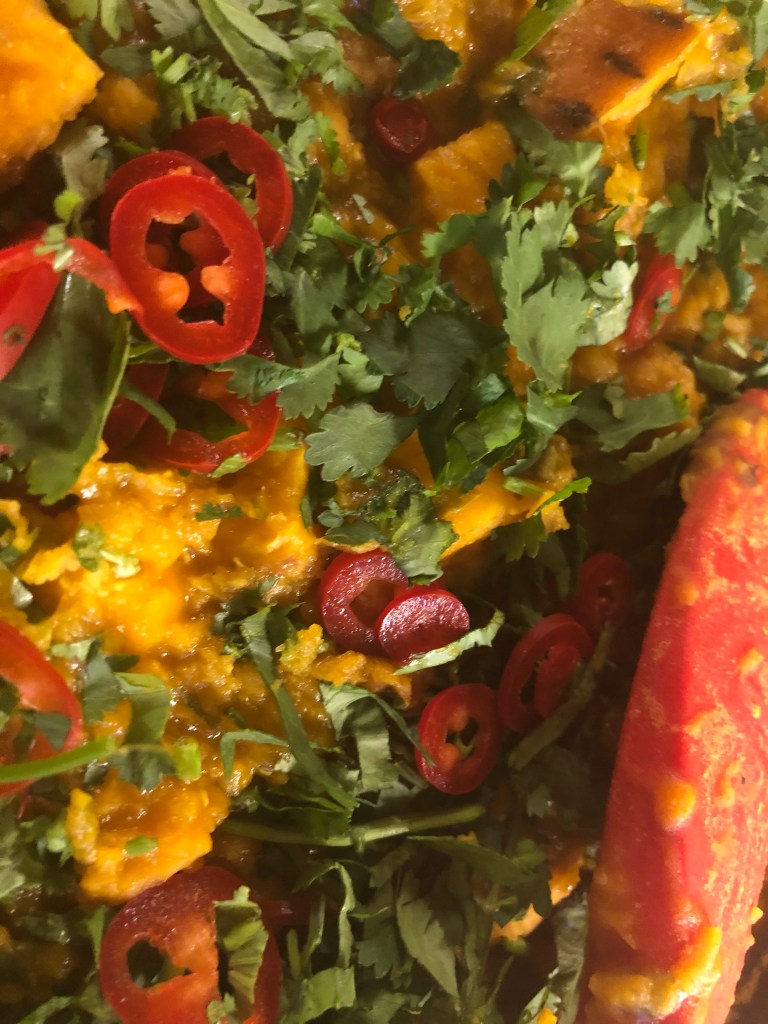
This one pot dish is adapted from a recipe published by Weight Watchers International in Comfort and is easy to make low FODMAP. The original recipe uses butternut squash instead of sweet potato, works just as well but takes longer to prepare. The quantities below serve 4 and it takes between 45 and 50 mins from start to finish… I usually serve with rice, but it is quite filling, so I often just enjoy it by itself.
Ingredients:
Olive oil
2 red onions
2tbsp mild curry powder
3cm piece of ginger
600g sweet potato
2tbsp tomato purée
1.2 litres veg stock
300g red lentils
Small bunch of coriander
Juice of a lime
Red chilli
(see below for low FODMAP alterations)
Method:
- Cover the base of a large, heavy-based pan with the oil and cook the sliced onionsfor 6-8 mins. Then add the curry powder, grated or finely sliced ginger, sweet potato (cut into 2-3cm cubes) and tomato purée and stir for 2 mins.
- Add the stock, lentils and coriander stalks, then cover and simmer gently for 25-30 mins, until the vegetables are tender. Season to taste and stir in the lime juice, then allow to stand, uncovered, for 5-10 mins, so that excess liquid is absorbed.
- Sprinkle coriander leaves and some thinly sliced red chilli on the top and serve.
Low FODMAP alternative.
3 sticks of celery, sliced, instead of the onions.
Recipe 2 – Vegetable curry
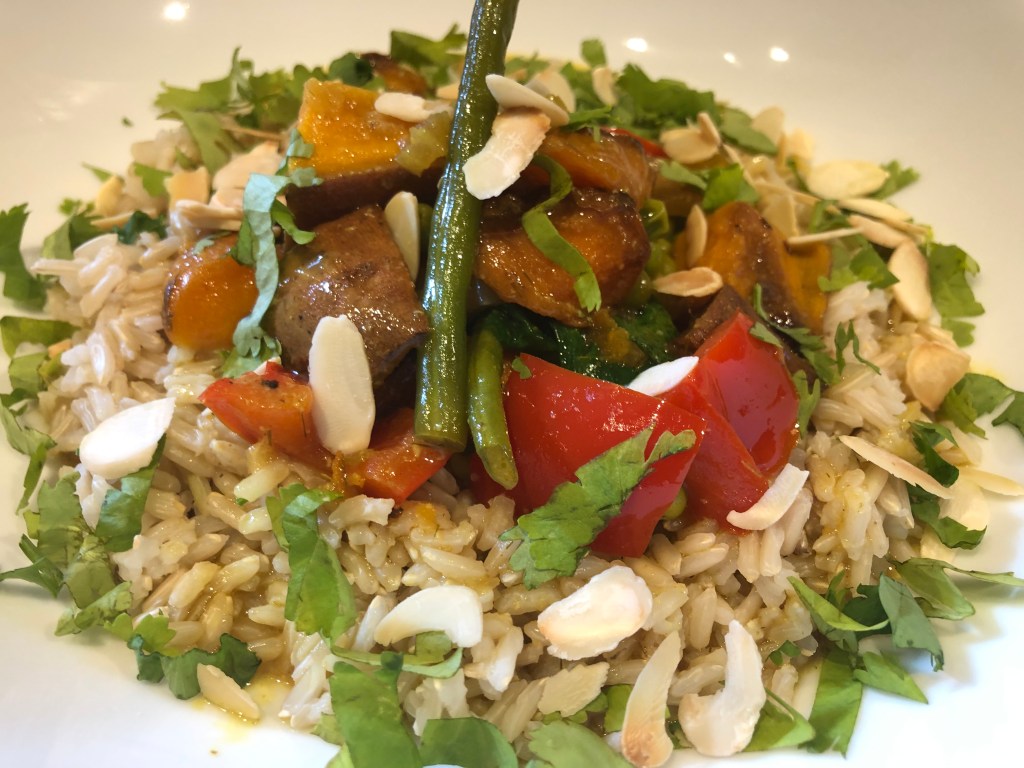
I use the base from this recipe for a variety of curries, as it provides a good background flavour as well as texture. I have adapted it from a recipe in The Guardian from 2011, by Hugh Fearnley-Whittingstall. The quantities below serve 4-6 and, depending on what you are putting with the base can take up to an hour from start to finish, though can also be 30-40 minutes. The original recipe uses one can of coconut milk but I prefer lots of juice! I serve with rice, though breads would clearly work too!
Ingredients:
3 tbsp vegetable oil
2 large onions
4 cloves of garlic
2-3 green chillies
5cm ginger
1tbsp curry powder (mild or medium, depending on preference)
2 400ml tins coconut milk
200ml vegetable stock
up to 1kg vegetables of choice
bunch coriander
flaked almonds
(see below for low FODMAP alterations)
Method:
- I tend to roast some vegetables to start, so heat oven to 200C. Chop sweet potatoes/carrots/aubergines/cauliflower, season, drizzle oil and cook until softened, but not too soft – about 25-30 minutes.
- Whilst the vegetables are roasting, warm the rest of the oil in a large, heavy-based pan on a medium heat. Slice the onions, add salt to the pan and cook the onions until softened, about 6-8 minutes. Whilst they soften, chop the garlic, chillies and ginger.
- Once the onions are softened, turn up the heat slightly, add the garlic, chillies and ginger and cook for a further 3-4 mins, then add the curry powder and cook for a further minute. Then add the coconut milk, and vegetable stock. Stir well and when the mixture comes to the boil, turn to a low simmer. I add additional vegetables at this time – frozen peas, beans, anything you have to hand that doesn’t require too much cooking. After 10 minutes or so, turn down low and add the roasted vegetables.
- For some extra crunch, I tend to throw in some sliced pepper at this point, whilst I chop coriander and quickly toast some flaked almonds. As child #1 is nut allergic, he has pumpkin seeds instead of almonds.
- Sprinkle the coriander and almonds on the top and serve. We like to serve with raw spinach and rice.
Low FODMAP alternatives – these may not work for everyone, as individual needs can vary.
Replace the onions with 3 sticks of celery.
Use garlic oil instead of vegetable oil and omit garlic from the base recipe.
Recipe 3
Nam jim aubergine salad with wild rice
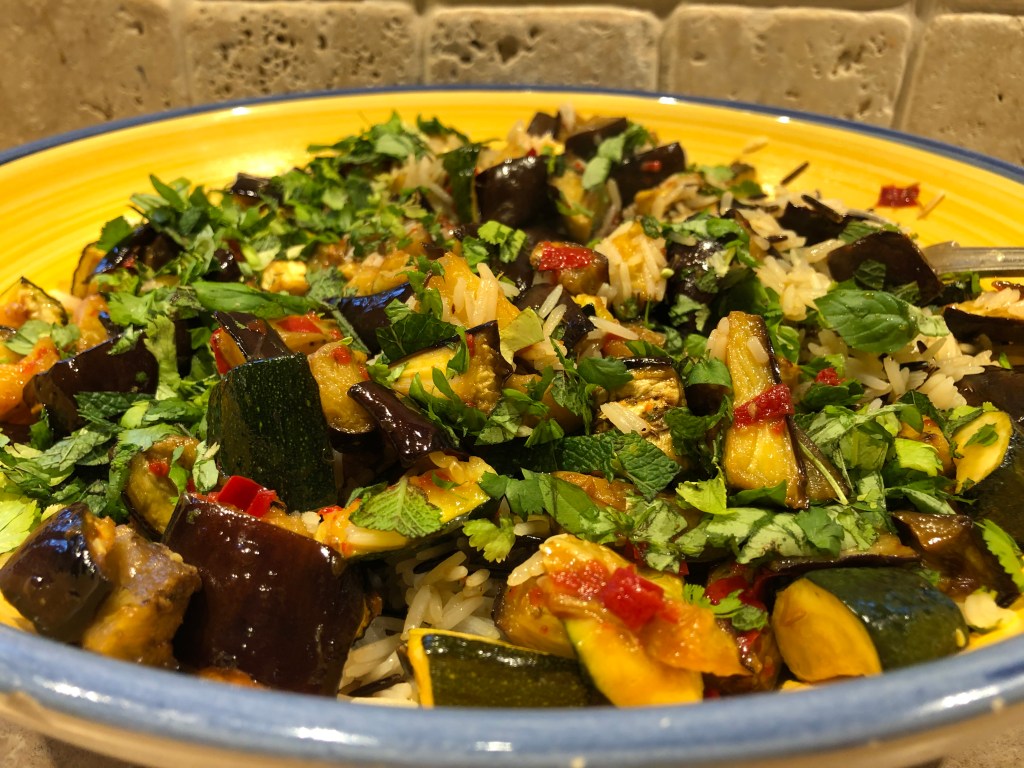
This recipe is one of Meera Sodha’s, taken from Feast in The Guardian and is a firm family favourite. We tend to eat it hot rather than cold, but it works equally well either way! The quantities below work for 4 as a main. It takes just under an hour from start to finish.
Ingredients:
4 aubergines (c1.2 kg)
Rapeseed oil
300g wild rice
And for the dressing:
25g coriander
3 garlic cloves
3 bird’s eye chillies (or just fresh red)
1tbsp dark brown sugar
2tbsp soy sauce
5tbsp lime juice (2-3 limes)
3tbsp orange juice
20g Thai basil
20g mint
(See below for low FODMAP alterations)
Method:
- Heat the oven to 200c (180C fan)/gas 6. Cut the aubergines into roughly 2cm x 4cm chunks, put into a large bowl, pour over four tablespoons of oil and toss to coat. Place the aubergines in a single layer across two oven trays and bake for 25 minutes, turning once halfway. Keep the bowl for later.
- Cook the rice according to the packet instructions.
- Whilst the rice is cooking, start the dressing. Put the stalks of the coriander, the garlic, chillies and three-quaters of a teaspoon of salt into a mortar and bash until smooth. Tip into the larger bowl used in stage 1. Add the sugar, soy, lime and orange juices. stir together until the sugar dissolves.
- Once the aubergines are cooked, add to the bowl of dressing, so that the aubergines can absorb some of the dressing.
- Shred the basil, mint and coriander leaves.
- To assemble, put the rice into a serving bowl and add the aubergines, leaving as much of the dressing behind as possible. Add the shredded mint, coriander and basil to the dressing bowl, gently toss to mix, then drizzle over the top of the aubergines.
Low FODMAP alterations: (nb as always, these are specific to child #3 and may vary for others)
Toss the aubergines in garlic oil, rather than plain rapeseed oil.
Omit the garlic from the dressing.
Other substitutions:
I have used ‘normal’ basil instead of Thai, if you can’t get hold of it.
I have also used chilli flakes instead of the fresh of bird’s eye chillies.
The recipe will work with courgettes as well, should you need, or a mixture of both.
Recipe 4
Pasta with za’atar and parmesan
(Za’atar cacio e pepe)
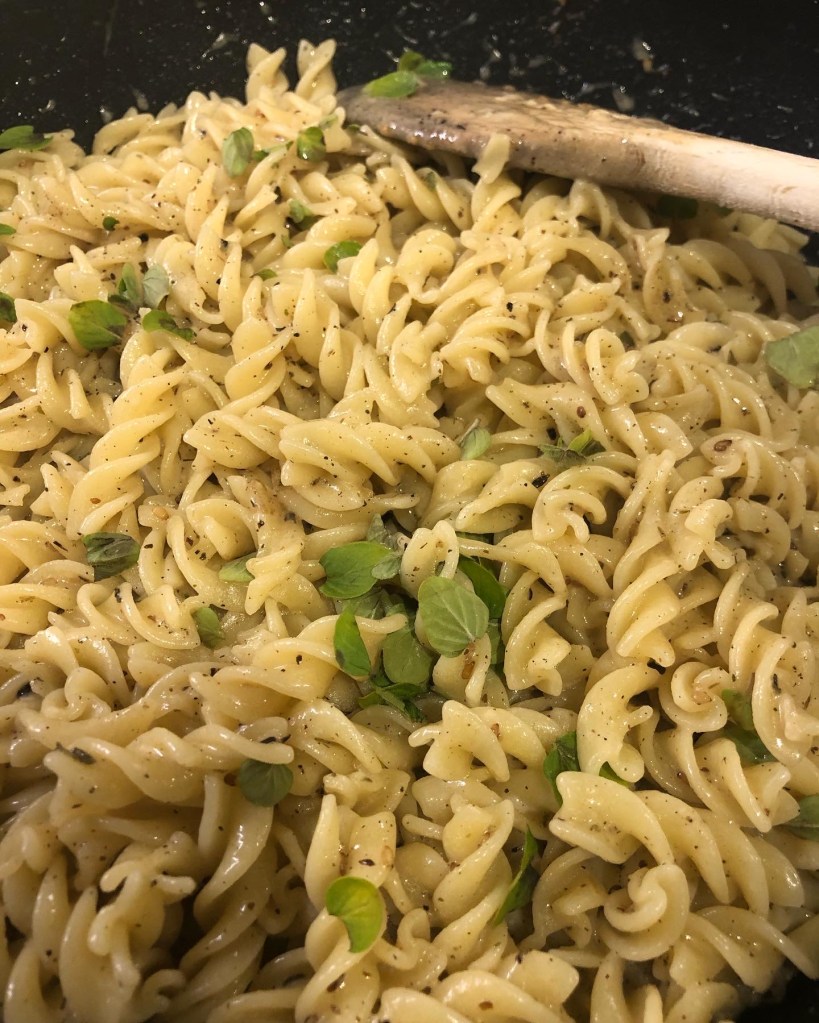
This dish, adapted from Ottolenghi’s za’atar cacao e pepe which was published in Feast has introduced the family to the taste of za’atar, marrying it with pasta. It is a quick and easy meal to prepare – even child #1, a reluctant cook at best, has given this his seal of approval! I have used a variety of pasta shapes on different occasions, so use whatever you have in the cupboard. The quantities below serve 4 and you will be eating within 45 minutes of starting to prepare/cook.
Ingredients:
400g fusilli (though spaghetti works well too)
50g unsalted butter
10g za’atar, plus extra to serve
2tsp black pepper
130g parmesan
30g pecorino
2 1/2tbsp olive oli
2tsp marjoram leaves (I tend to use fresh basil or dried oregano)
Method:
- In a wide pan bring 1.3 litres of water to boil on a medium-high heat, season with salt and add the pasta. Cook until al dente, making sure that the pasta doesn’t stick to the bottom of the pan and that it stays fully submerged. Drain the pasta and reserve all the cooking water. You should have about 520 ml left; if not, top up with hot water.
- In a large, high-sided, nonstick pan, melt the butter until bubbling over a high heat. Add the za’atar and pepper and cook, stirring, for a minute, to release the aromas. Add the reserved cooking water, bring to a rapid boil and cook for five minutes, until it reduces a little and turns silky. Stir the pasta vigorously into the sauce, then add the parmesan in two batches, continuing to stir as you go and making sure that the first half has melted before adding the second.
- Once the parmesan has melted, add the pecorino, continuing to stir until it too has melted and the sauce is smooth and silky. Transfer to a serving bowl and finish with the oil, leaves, a pinch of salt and between 1 and 2 tsp of za’atar.
Changes/alterations…
I have used gluten free pasta, which works well, due to the extra starch in the water for the ‘sauce’. I have yet to find a vegan or lactose free cheese that works as well as the above, but lactose free ‘cream cheese’ can add a silkiness to the sauce. Spreads, such as PURE can work well instead of the butter.
Recipe 5
Sweet potato, feta and avocado salad
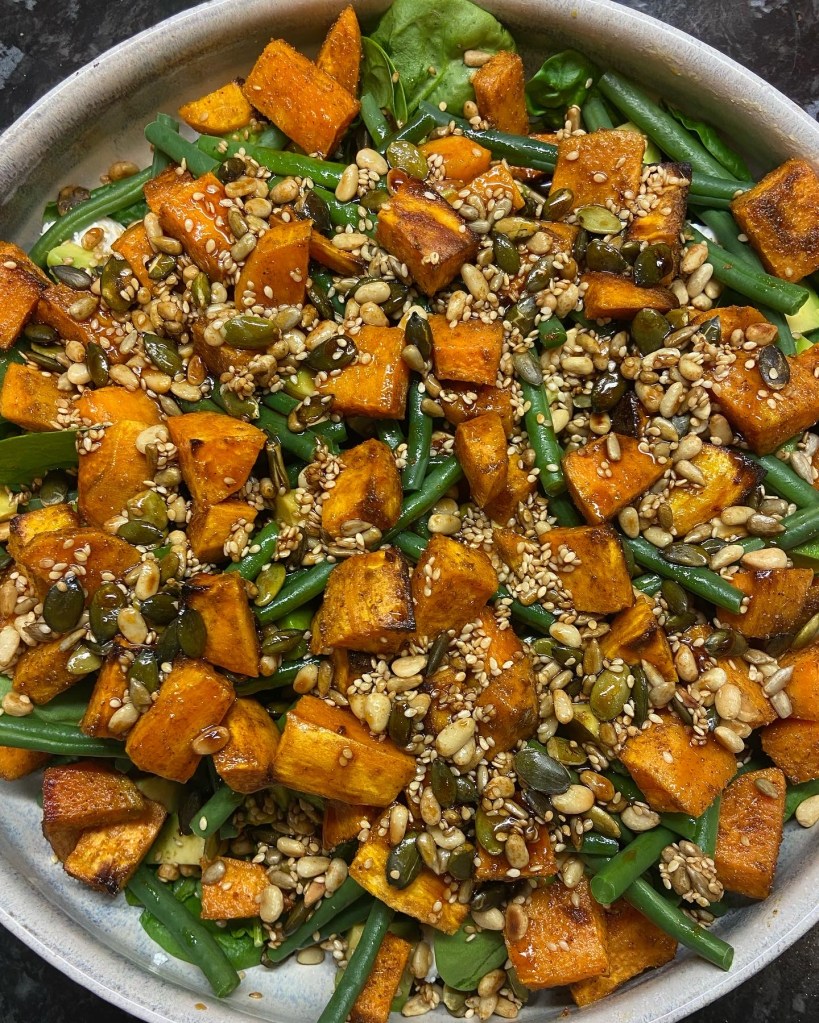
I am continuously on the hunt for salads that work as well both on hot summer days or slightly cooler evenings, salads which are delicious hot, warm or cold. I recently found a page ripped out of vegetarianrecipesmag.com (march ’19) which has a salad that ticks the above boxes perfectly. The range of ingredients also means that it avoids the pitfall of many salads of being a bowl full of rather homogenous textures. It is vegetarian and can easily be adapted to be vegan too. For those on a low FODMAP diet, the range of ingredients mean that you can change the proportions to suit your own individual requirements. To that end, therefore, please be advised that the quantities below are merely a (very) rough guide… adapt as you wish according to your tastes. I tend to omit the almonds from the sprinkle completely, due to child #1’s nut allergy!
Ingredients:
2 Sweet potatoes/1 butternut squash
2 tbsp olive oil
1 tbsp ground cumin
200g green beans
100g baby spinach leaves
2 avocados
100g feta
1 tbsp honey, 2 tbsp soy sauce, 60 ml olive oil
155g chopped almonds, 105g pumpkin seeds, 80g pine nuts, 60g sunflower seeds, 80g sesame seeds, splash soy sauce
Method:
- To make the sprinkle, heat a heavy-based pan before adding almonds. Move them continually before adding the pumpkinseeds, pine nuts and sunflower seeds. Add the sesame seeds when the mixture is starting to brown. Once golden brown, take off the heat, allow to cool for a few minutes then add a few splashes of soy sauce. Set aside to cool.
- Preheat the oven to 200C. Peel and cube the squash/sweet potatoes and place on a baking tray. Drizzle over the olive oil and add the cumin, mixing to ensure a good coating. Roast for 20 mins or so, until tender but with a bite still.
- Top and tail the green beans and cook for 5-10 minutes, so they retain a bite as well.
- To make the dressing, put the honey, soy sauce and olive oil in a bowl and whisk until combined.
- Place the spinach at the bottom of your salad bowl then add the cubed feta, chopped avocado and beans, followed by the roast sweet potato/squash. Dress the salad and toss, before adding a generous amount of the sprinkle.
Notes/changes/alterations.
I have substituted maple syrup for the honey and used a vegan feta.
I use less avocado for low FODMAP child#3 and build up the salad with more green beans. She is also gluten intolerant, but there are several good soy sauces out there too.
Recipe 6
Eastern prawn pasta with feta, garlic, pul biber and Greek basil
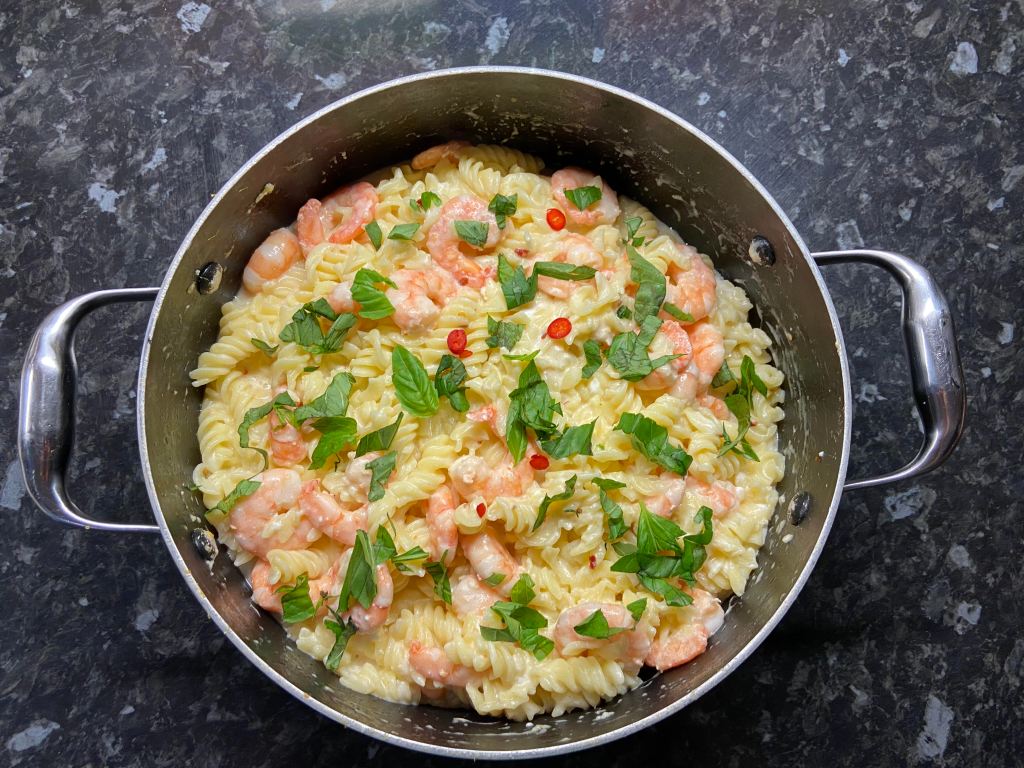
This has quickly become a firm family favourite. Simple and quick to cook, the recipe is flexible enough to make using store cupboard staples instead of the ingredients listed below without compromising the core essence of the recipe, which is adapted from an article in the Sunday Times Magazine from September 2017, based on a recipe from Feasts by Sabrina Ghayour. As always, I’ll give details of amendments I make due to family eating needs! The quantities below serve 4-6 people, unless child #1 is involved, in which case only 4 max!
Ingdredients:
Olive oil
6 garlic cloves
500g linguine (though I have used any pasta shape I happen to have)
600g raw, peeled prawns
50g unsalted butter
2 unwaxed lemons
2-3 tbsp pul biber chilli flakes
400g feta
Greek basil leaves
Method:
- Drizzle olive oil into a large frying pan, slice the garlic into slivers and add to the pan, cooking until translucent and soft (not brown!). Remove the pan from the heat.
- Cook the linguine until al dente, then drain, reserving the liquid.
- Return the frying pan to the hob and add the prawns until pink, opaque and cooked through.
- Add the pasta back to its pan, then add the frying pan contents, butter and a couple of ladles of the reserved pasta liquid. Season well.
- Zest the lemons and add this to the pan, along with the feta, which you have cubed and some basil leaves. Stir well, drizzle with olive oil and serve.
Notes/changes/alterations
For low FODMAP no garlic child#3, I use garlic oil instead of the garlic and tend to scatter some garlic chives on at the end.
The recipe works just as well with gf pasta and I have also used lactose free feta. You just need to watch the gf pasta slightly more when assembling. I have also used non-dairy spread to replace the butter.
I have used Thai basil, ‘normal’ fresh basil and even dried when I had no fresh leaves – recipe is better with fresh leaves.
I have used a variety of different chilli flakes when out of pul biber – ancho chilli flakes work well, but a combination of dried chilli flakes and fresh chilli works well too!
If more rushed, I put the pasta on and, whilst cooking, put the garlic, chilli and prawns on together, just to save a little hassle when assembling!
Recipe 7
Quick roasted tomatoes with white beans
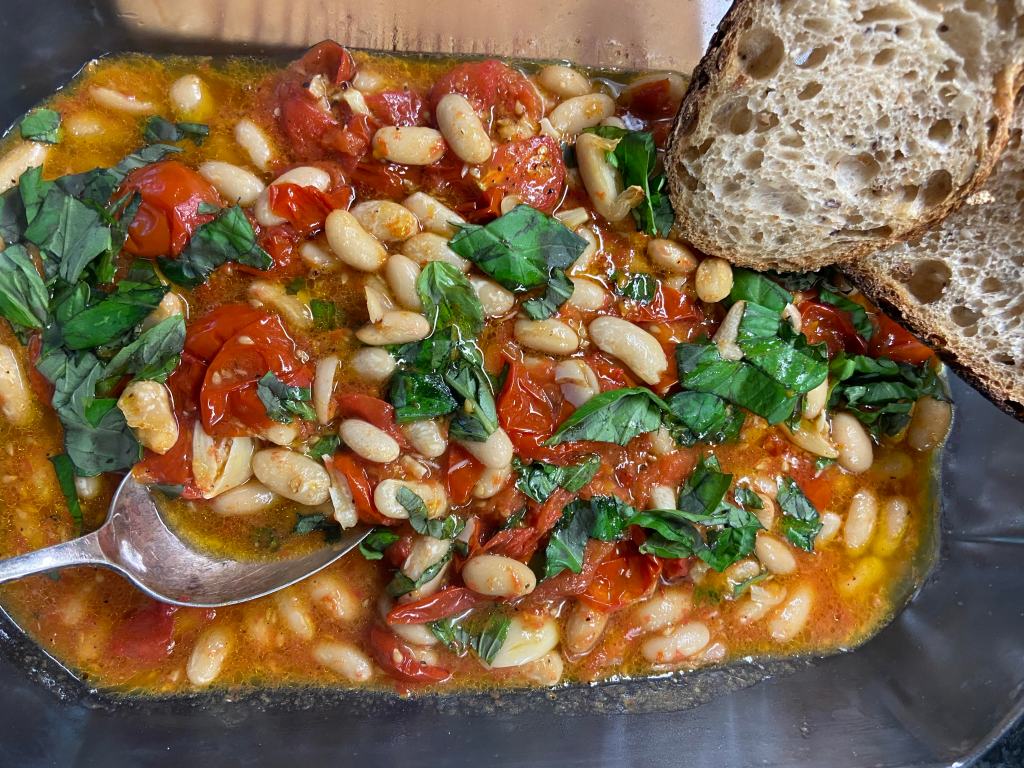
Always keen for quick and tasty meals, I came across this one, from smittenkitten.com. It perfectly meets the brief! I was looking to use up a surfeit of tomatoes I had in the fridge and also for something to put on some ever-so-slightly stale sourdough. These quick roasted cherry tomatoes with beans, garlic and basil provided loads of juice requiring mopping up… would make a great starter or a lovely accompaniment to a main course.
Ingredients:
Olive oil
454 grams of ripe cherry tomatoes
6 garlic cloves
1 400g can of cannellini beans
handful of fresh basil
salt and pepper
Method:
- Heat the oven to 205C/400F and pour two tablespoons of olive oil in the bottom of a baking dish (mine was c30cm x 20cm). Slice the tomatoes in two and place cut side up in the dish. Peel the garlic cloves and arrange amongst the tomatoes.
- Drizzle another two tablespoons of oil, sprinkle with a tsp of salt and lots of black pepper. Roast for 20 minutes.
- Remove from the oven, lightly mash the tomatoes and garlic with a fork. Add in the drained can of beans and stir to combine. Return to the oven for a further five minutes. Remove and scatter with thinly slices fresh basil leaves.
Notes:
For child #3, I garlic oil as the olive oils and omit the cloves of garlic.
Recipe 8
Lentil and roast vegetable salad
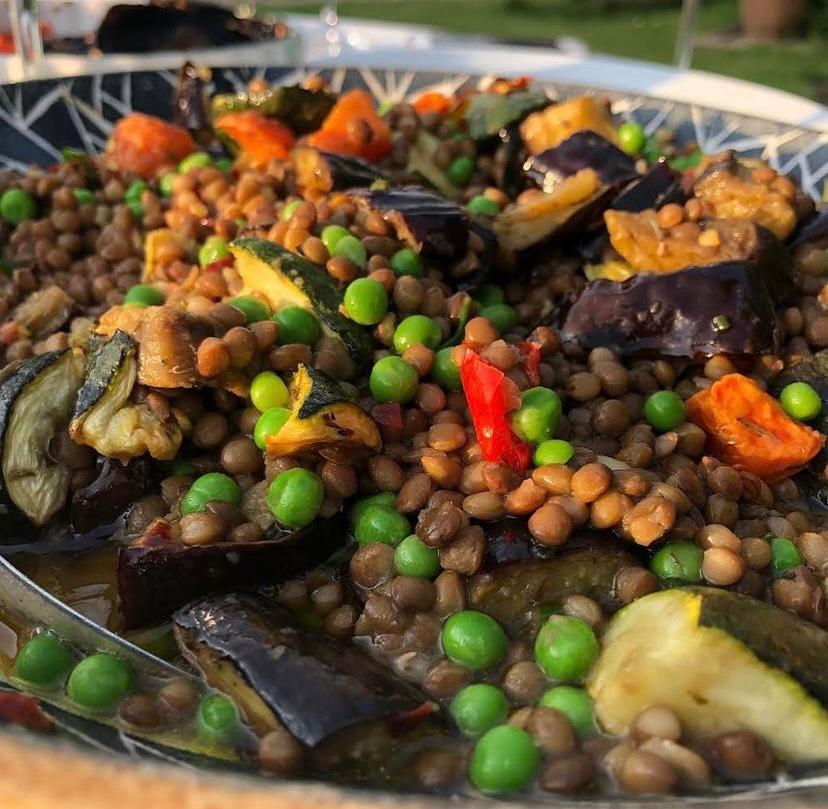
You are probably aware of my constant quest to find ‘interesting’ salads that can be served hot or cold; even better if the basic recipe is flexible enough to become a ‘what veg are left in the fridge that need using up’ staple. The following recipe, taken from Meera Sodha’s contribution to Feast in the Guardian (23.03.19) ticks all the boxes. As longer, warmer spells become more frequent, this is just the sort of recipe that will work. As usual, alterations/substitutions will come at the bottom of the method. The quantities below serve 3 as a main and 4 as a side.
Ingredients:
1 aubergine
3 red peppers
8 banana shallots
4 garlic cloves
7 tbsp olive oil
1 tsp dried marjoram
1 tsp dried oregano
11/2 tsp salt
1 lemon
1 tsp chilli flakes
150g frozen peas
2 x 250g packs pre-cooked lentils
Method:
- Chop the peppers and aubergine into bite-sized chunks and put into the bowl in which you will serve the salad. Peel and quarter the shallots and add to the chopped veg. Crush the unpeeled garlic cloves and add to the bowl with four tablespoons of the oil, the marjoram, oregano and one tsp salt. Mix it all together until well coated, then put onto two roasting trays. Place into a pre-heated oven (180C/160C fan/gas 4) for 40 minutes, stirring half way through.
- Take the frozen peas out of the freezer and allow to defrost whilst the vegetables are cooking. You can also make the dressing; use the same (unwashed) bowl as before. Add the three remaining tbs of olive oil, the juice of the lemon and the chilli flakes. Mix well.
- Once the vegetables are cooked, remove the garlic and squeeze out the flesh, chop roughly and add to the dressing in the bowl. Add the defrosted peas and mix. If you want the salad hot, then heat the lentils and add half to the dressing, before adding the vegetables and the rest of the lentils. Season with the remaining salt and serve!
Additions/notes/substitutions
For low FODMAP/garlic intolerant child #3, I have used garlic oil instead of olive oil and not included the garlic cloves, often adding some garlic chives as a sprinkle. I have also replaced the shallots with 2 sticks of celery, as onion is difficult too.
I have changed the amounts of pepper/aubergine, used different veg instead. It’s good to use something that holds its shape and/or caramelises slightly in the cooking. The main thing is to have a good lentil to vegetable ratio!
I don’t always have marjoram, so either double the oregano, or use mixed herbs instead.
I often use one 400g tin of lentils as it is cheaper that the Merchant Gourmet ones recommended in the original recipe; again, the veg/lentil ratio is key!
Recipe 9
One pot puttanesca
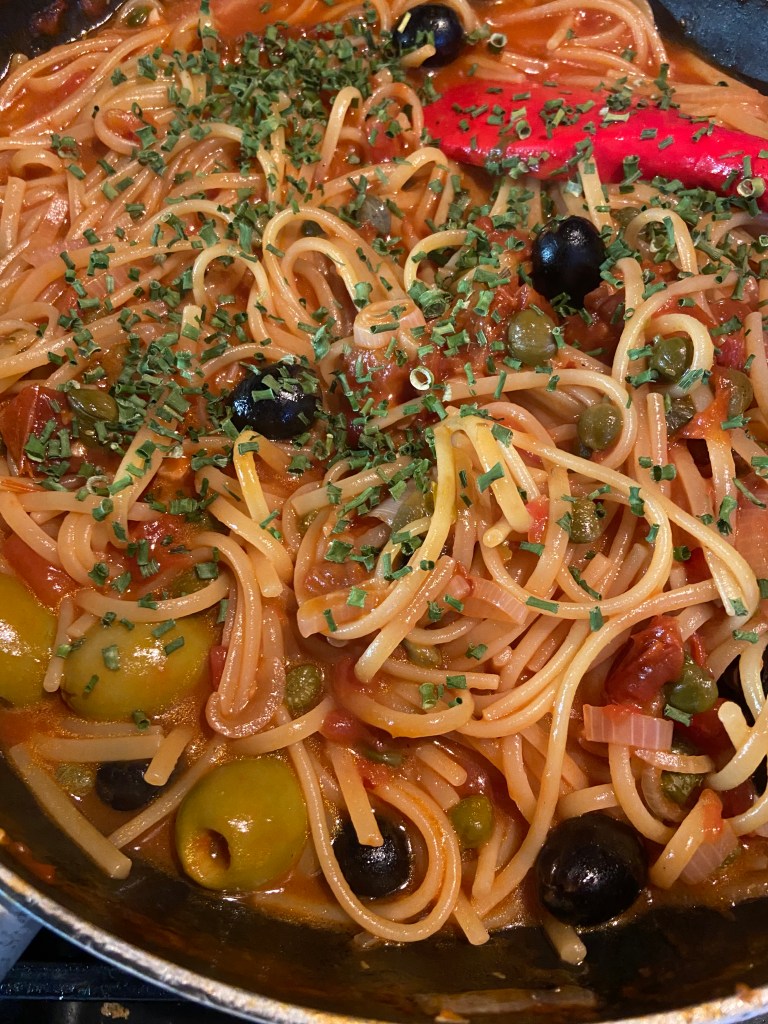
This is a quick and easy ‘cupboard staples’ go-to recipe that is also flexible with its ingredients, making it ideal for a variety of dietary requirements. It has fast become a firm family favourite. I first came across it in Plant based magazine (Oct ’19). The quantities below serve 4 comfortably, with a bowl of left-overs for the following day! As always, additions/substitutions at the bottom.
Ingredients:
2 tbsp olive oil
2 red onions
4 cloves of garlic
1 tsp dried chilli flakes
120g olives
12 sun-dried tomatoes
6 tbsp capers
2 400g tins chopped tomatoes
800ml vegetable stock
500g spaghetti/linguine or pasta of your choice!
Method:
- Add the olive oil to a large saucepan over a medium heat, then throw in the chopped onions, garlic, chilli flakes, olives, chopped sun-dried tomatoes and capers and cook for 4-5 minutes.
- Add the tinned tomatoes and vegetable stock, bring to the boil and then add the pasta. Cook until the pasta is cooked and the sauce has thickened. Season to taste and sprinkle with chives.
- Additions/notes/substitutions
Pasta – I prefer linguine, but most pasta shapes work well. Gluten free pasta works well too, though you need to be more attentive to it during the cooking, as I find it tends to clump more.
Quanitites – I play fast and loose with the amount of capers/olives/sun-dried tomatoes; the main thing is to have the variety and a goodly amount. You might need a further 50 ml of stock as well – depends on the quality of the pasta.
For child #3, I use garlic oil instead of olive oil and omit the garlic. I also use 2 or 3 sticks of celery instead of the red onions. Fresh or dried chives work equally well and I use garlic chives if I have any.
Recipe 10
Roast garlic soup with green olive toasts
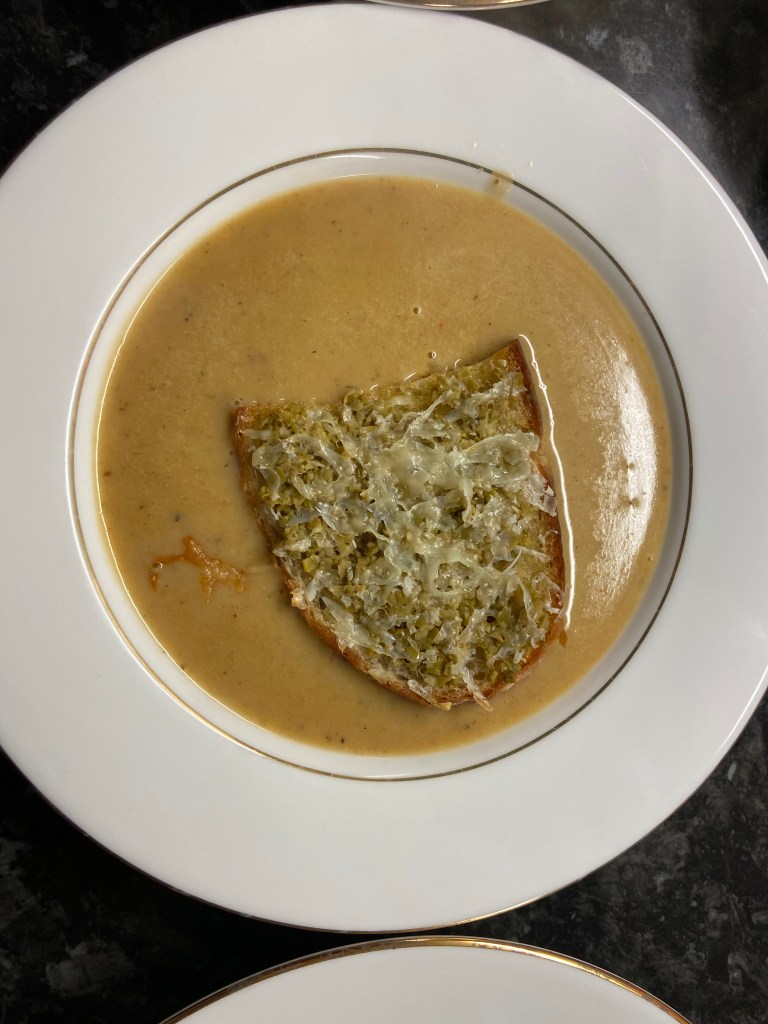
This recipe is adapted from José Pizarro’s version which was in the Guardian (Aug ’22). To ensure the flavour really comes through, I have increased the amount of garlic and also decreased ever so slightly the amount of pimentón. It is just a delicious recipe and you should have enough green olive topping for nibbles the next day! The amounts below serve 4-6. As always, additions/substitutions at the bottom!
Ingredients:
Olive oil
4 garlic bulbs
100g fresh white breadcrumbs
1/2 tsp pimentón
1 litre vegetable stock
200ml whole milk
200g pitted green olives
2 tbsp capers
1 garlic clove
1 lemon
Olive oil
Crusty loaf – I tend to use a sourdough
75g manchego
Method:
- Heat the oven to 180C (160C fan) /350F/gas 4). Rub the garlic bulbs with oil, put them in a small roasting tin and roast for 20-30 minutes, until squishy and tender. Remove and leave to cool. Once cooled, squeeze the soft flesh into a bowl, discard the skins and mash with a fork.
- Put 3 tbsp olive oil into a heavy bottomed pan on a medium heat and fry the breadcrumbs until golden (4-5 mins). Stir in the mashed garlic and pimentón, season well and fry for a minute. Pour in the stock, bring to a simmer, leave to bubble for 20 minutes, then blitz smooth with a hand blender.
- To make the olive toasts, put the olives, capers and peeled garlic clove into a food processor and blend, adding the finely grated zest and juice of the lemon and 4 tbsp olive oil. Season to taste.
- Slice the bread you are using and arrange on a baking sheet, drizzle with oil and bake on both sides until toasted slightly – about 2 mins per side. Spread each slice with the green olive mixture, scatter over the grated manchego and return to the oven until the cheese has melted, again 2-3 minutes.
- Pour the milk into the soup, leave to simmer for a few minutes, then ladle into the bowls, float a piece of toast on each portion and serve!
If serving as a starter as part of a larger meal and with guests around I tend to make the soup and the toasts ahead of time, so that all I need to do at the last minute is add the milk then heat the soup and also the final melting of the cheese on the toasts. I also prepare at least 2 slices of toast per person, serving one in each bowl and the rest on a plate for later dipping and picking!
To make this vegan I ensure that the loaf I use is and then use a plant-based “milk”. Suffice it to say child #3 hasn’t been offered this, though I have removed the garlic from the toasts and used garlic oil, so that they can be part of the starter action.
Recipe 11
Za’atar roasted carrots with feta dip
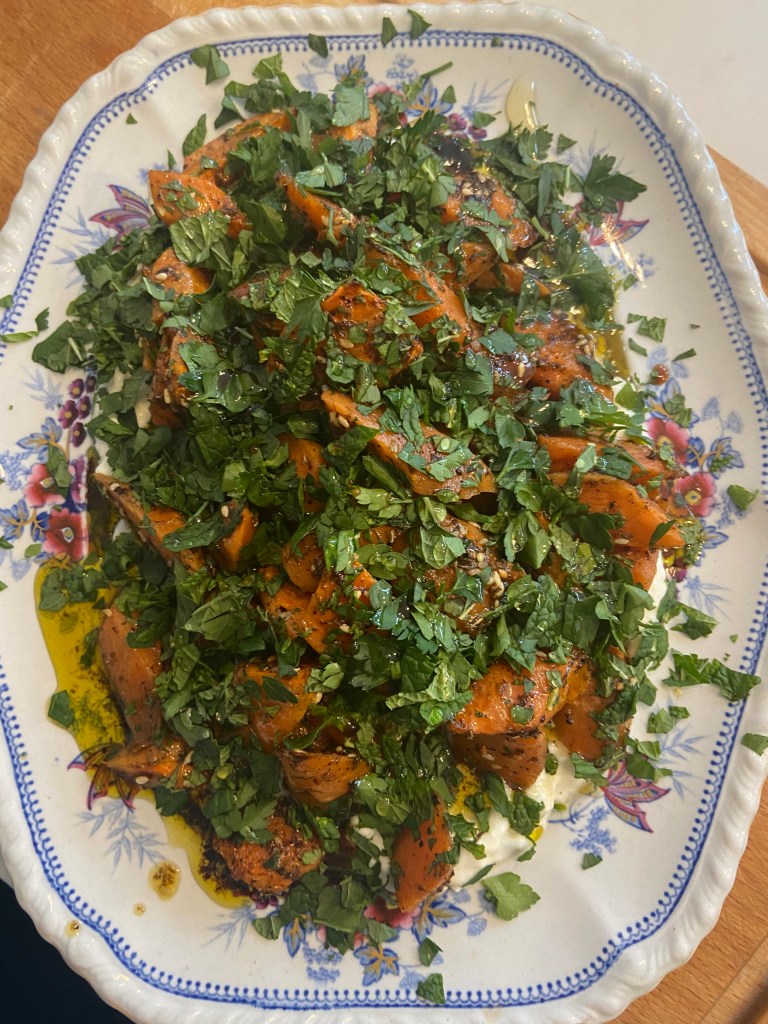
This recipe popped up on one of my social media feeds and immediately looked interesting. The recipe is from something nutritious and is as tasty as it both sounds and looks! I served it at one of those times when you want to just pick at a variety of different dishes with friends at a leisurely lunch, rather than indulge in a ‘big’ meal. It made a great addition to the table on a day when spring was threatening to interrupt winter earlier this year.
Ingredients:
1lb/500g carrots
Olive oil
1tbsp za’atar
1/4tsp cumin
salt and pepper
120g/1/2 cup feta
3tbsp ricotta
olive oil
1tbsp lemon juice
1tbsp fresh mint
2tbsp parsley
honey/date syrup
Method:
- Pre-heat oven to 205C/400F/gas 6. Peel and slice the carrots, toss with 3 tbsp olive oil and the spices and roast for roughly 35 minutes, turning them half way through.
- To make the feta dip, blend together the feta, ricotta, 2 tsp olive oil, lemon juice and a pinch of salt and pepper.
- To serve, spread the dip in a shallow plate and then top with the roasted carrots. Garnish with the freshly chopped mint, parsley and a drizzle of oil and the date syrup or honey.. et voilà!
Notes: You may need slightly less mint and parsley, so add this in stages at the end! I made the dip immediately before serving, so that it felt fresh and moist. I used honey as I didn’t have any date syrup, but pomegranate molasses would work well too…
Recipe 12
After dinner chocolate tart
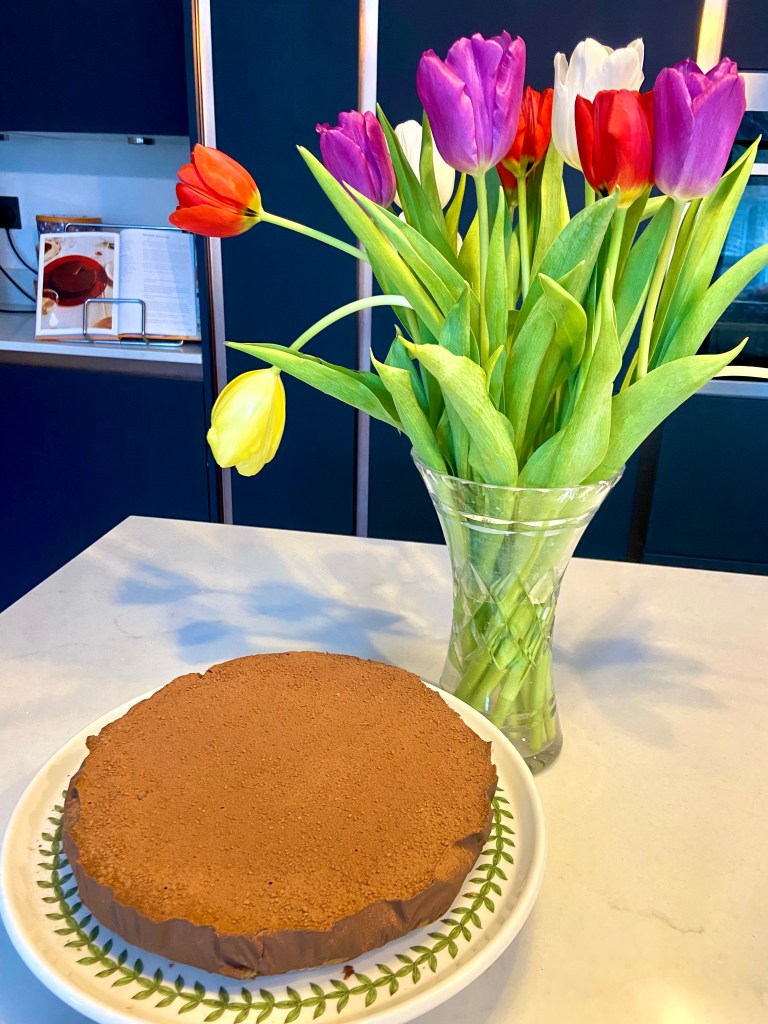
Taken from the awesome Ixta Belfrage’s MEZCLA, this chocolate tart has become a staple. As a vegan dessert, it suits the needs of child #2. It is also nut free, so child #1 is happy too. Take it from me, this is not a common occurrence – vegan, nut free desserts are not ten a penny! As is clear from both the recipes I have posted hitherto, my blog and instagram posts, I am less confident with desserts, so it speaks volumes for this dish that I am more than happy making it. I tend to serve with crème fraïche, though it works well just by itself too. WARNING – needs to be made the day before serving!
Ingredients:
200g ginger nuts
80g coconut oil
3/4tsp ground ginger
3/4tsp ground cinnamon
1/4tsp fine salt
400g tin coconut milk
300g dark chocolate
3tbsp maple syrup
1/2tsp vanilla bean paste
pinch flakes salt
1tsp chipotle chilli flakes – optional
2tsp cocoa powder for dusting
Method:
- Line with parchment the base and sides of a removable base 20 cm cake tin.
- Blitz the ginger biscuits in a food processor and then add to a bowl in which you have melted the coconut oil. Add the spices and mix to combine. Transfer to the tin and press down to make an even layer.
- Whisk the coconut milk in a medium saucepan on a medium-high heat and cook for a couple of minutes until steaming. Remove from the heat and add the rest of the ingredients. Leave to cool for a few minutes, then whisk until smooth and leave to cool for a further 15 minutes. Add the ganache to your base and refrigerate overnight.
- Remove from the fridge, dust with the cocoa powder, remove from the tin and serve!
Notes:
The amount of chilli depends on personal taste… we tend to like it with a bit of a kick, so I use 2tsp. However, you don’t need to use chilli at all. The book suggests tangerine zest as an alternative. It also suggests that you can use some milk chocolate to make the ganache less intense. If so, decrease the amount of maple syrup or omit completely.
 Cook.Eat.Blog.Repeat.